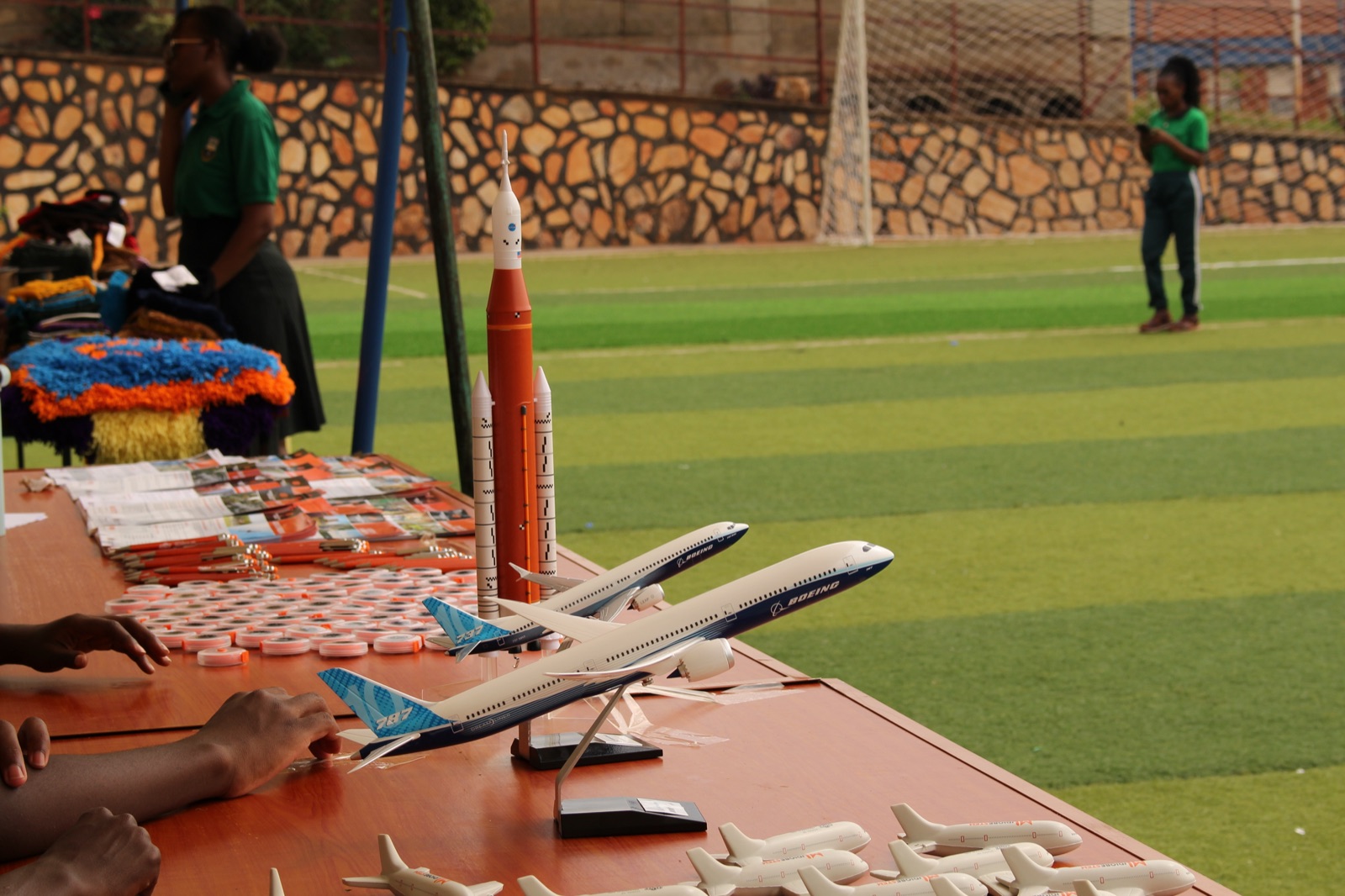
On Friday 11 July 2026, JdiobeSTEM Foundation exhibited at the third Laudato Si’ Green Festival at Holy Cross Lake View Senior Secondary School in Wanyange, Jinja. We brought model aircraft, rockets and vehicles, put them on a table, and let students take them apart. This is what happened, and what we learned from it.
The festival, and our part in it
The third Laudato Si’ Green Festival ran over two days, 10 and 11 July 2026, organized by the Laudato Si’ Club of Holy Cross Lake View Senior Secondary School under the Laudato Youth Initiative. Its theme was Environmental Conservation for Peace and Sustainable Development.
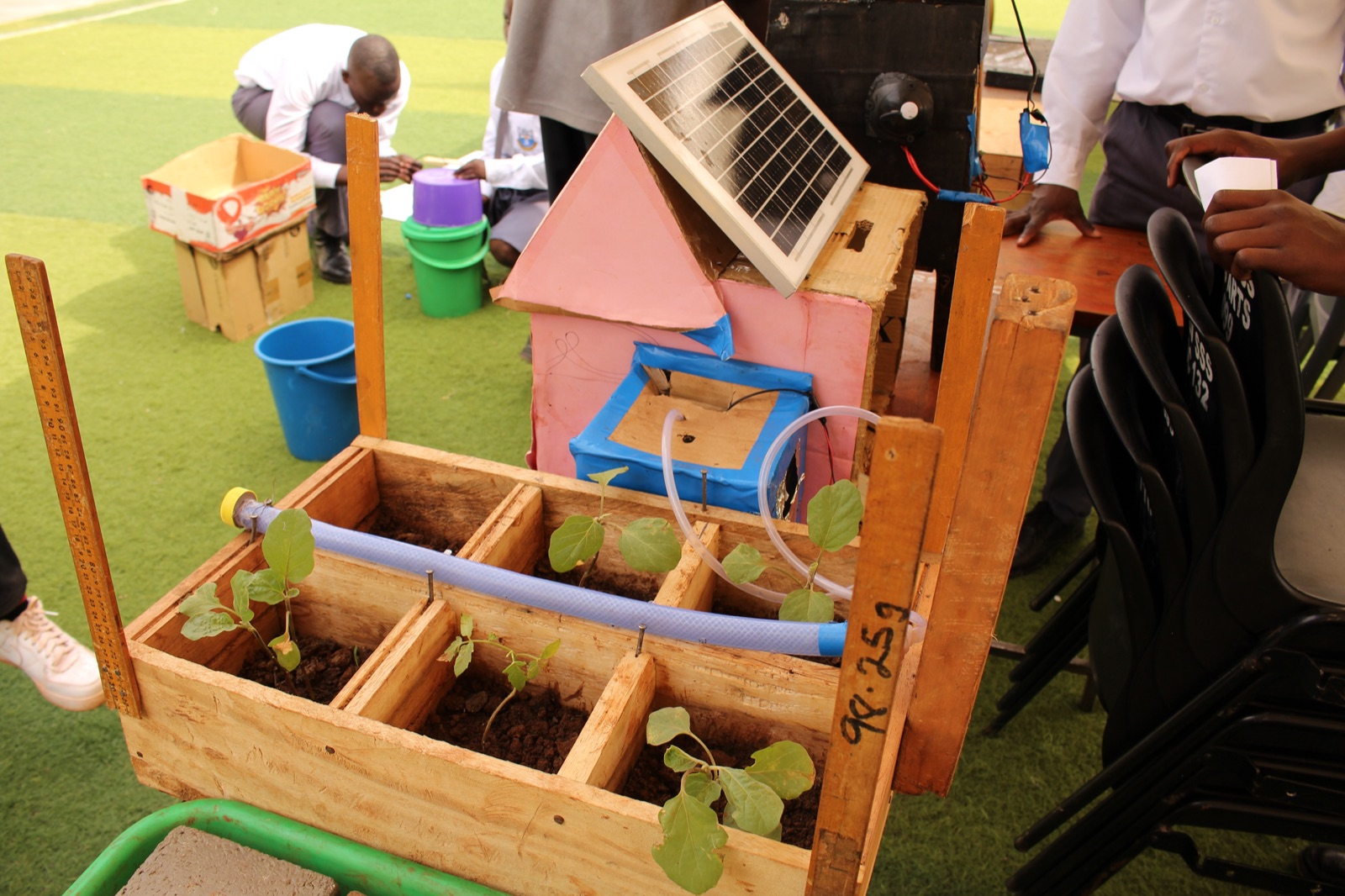
JdiobeSTEM was there for one of those days. The first day, 10 July, was given to a community clean-up across Wanyange and Bugembe; we were not part of it. We came on 11 July, the main day, to run the STEM practical exhibition alongside the youth-led eco-innovation exhibitions and research showcases.
That distinction matters to us. We are one partner among several in an event we did not organize, and the credit for the festival belongs to the club that built it and to the Laudato Youth Initiative that carries it.
A table, and what was on it
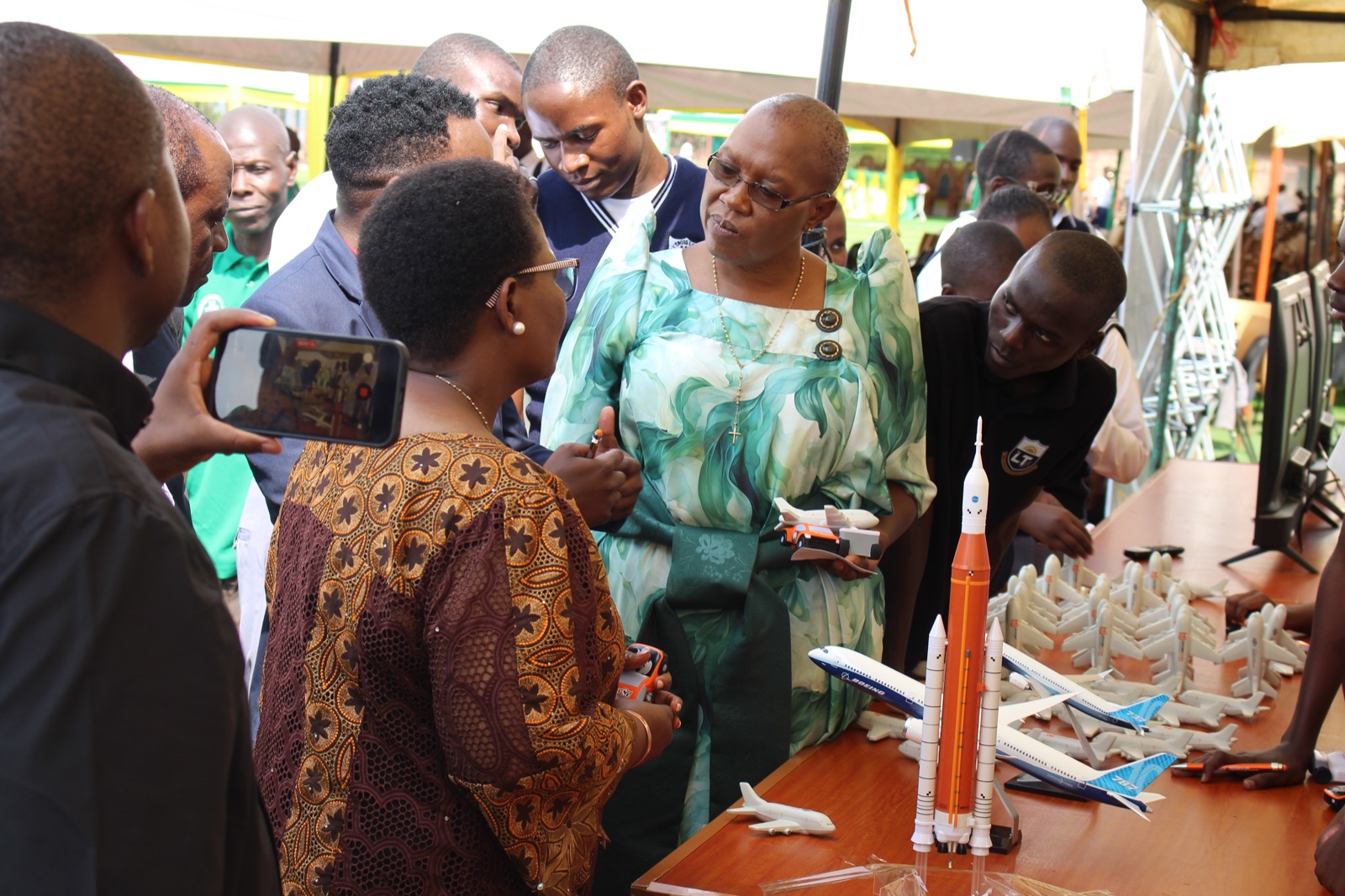
The exhibition was led by Dr. Muwanika Jdiobe, our Executive Director. He is an aerospace engineer in research and development at The Boeing Company and a STEM educator at Oklahoma State University, and he holds a PhD in aerospace engineering; his doctoral research was on unmanned aerial vehicles using ducted counter-rotating propellers — work aimed at making drones quieter and more efficient.
He also grew up in Jinja. The exhibition took place a short drive from where he went to school.
On the table were model aircraft, rocket models and model vehicles. Nothing was behind glass and nothing was demonstrated from a distance. Students picked the models up, turned them over, and asked why a wing is shaped the way it is. Several arrived with their questions already written down.
Nothing on the table required mains electricity or an internet connection. That was a deliberate choice, and it is the whole argument of a practical exhibition: the equipment is not the point. The reasoning is available to anyone willing to measure something, write the number down, and try again.
The question the teachers asked
Students asked about lift, drag and noise. Teachers asked a harder question, and asked it more than once: how does a school with no laboratory teach any of this?
We came to Wanyange to answer exactly that. A school does not need a laboratory to teach a student to state a question precisely, predict what will happen, measure it twice, and write down both numbers even when they disagree. That is the discipline our Research program is built on, and it survives a power cut.
The rest of the day
 The second day opened with a Green Walk through Wanyange and closed with the Care for Creation Mass, celebrated by Fr. Peter Caxton Mayanja, C.S.C., Provincial of the Congregation of Holy Cross in East Africa. The one-million-tree planting drive was extended with Catholic parishes in Busoga.
Between the walk and the Mass sat the part of the programme that is hardest to photograph: the sustainability dialogues, which ran three strands at once — science, community, and mental health. That pairing is unusual and, we think, correct. A young person who is frightened about the future does not need another lecture on carbon.
Hon. Justine Kasule Lumumba, Uganda’s Minister of Information and Communications Technology, spoke about putting artificial intelligence to work in environmental stewardship. Fr. Mayanja returned to storytelling, arguing that ecological awareness travels through stories people recognize rather than through figures they have no way of checking.
Sarah Kirikumwino, President of the Laudato Si’ Clubs, put the point of the whole day more plainly than anyone:
“We plant trees whose shade we will never sit beneath. We tend the soil that others will harvest.”
— Sarah Kirikumwino, President of the Laudato Si’ Clubs
The Laudato Youth Initiative also launched the Bishop Charles Martin Wamika Moral Formation and Good Use of Technology Legacy Program, on youth moral development and the responsible use of the internet and new technology. Those two things belong together. Every student who asked us about drones also asked, in one form or another, what stops somebody using one badly.
What we took away
The useful thing we noticed was not a number. It was that students who came to our table after sitting in a dialogue asked sharper questions. Somebody who has just heard about wetland encroachment asks a different question about drainage from somebody who has not.
That is the argument for holding a science exhibition inside a festival about creation, rather than on its own. Science answers “how”. The festival was asking “why”, and “for whom”. Students who have both in their heads at once ask better questions than students who have only one.
We are following up with the students who asked about the Science Fair and Research programs.
Who made it happen
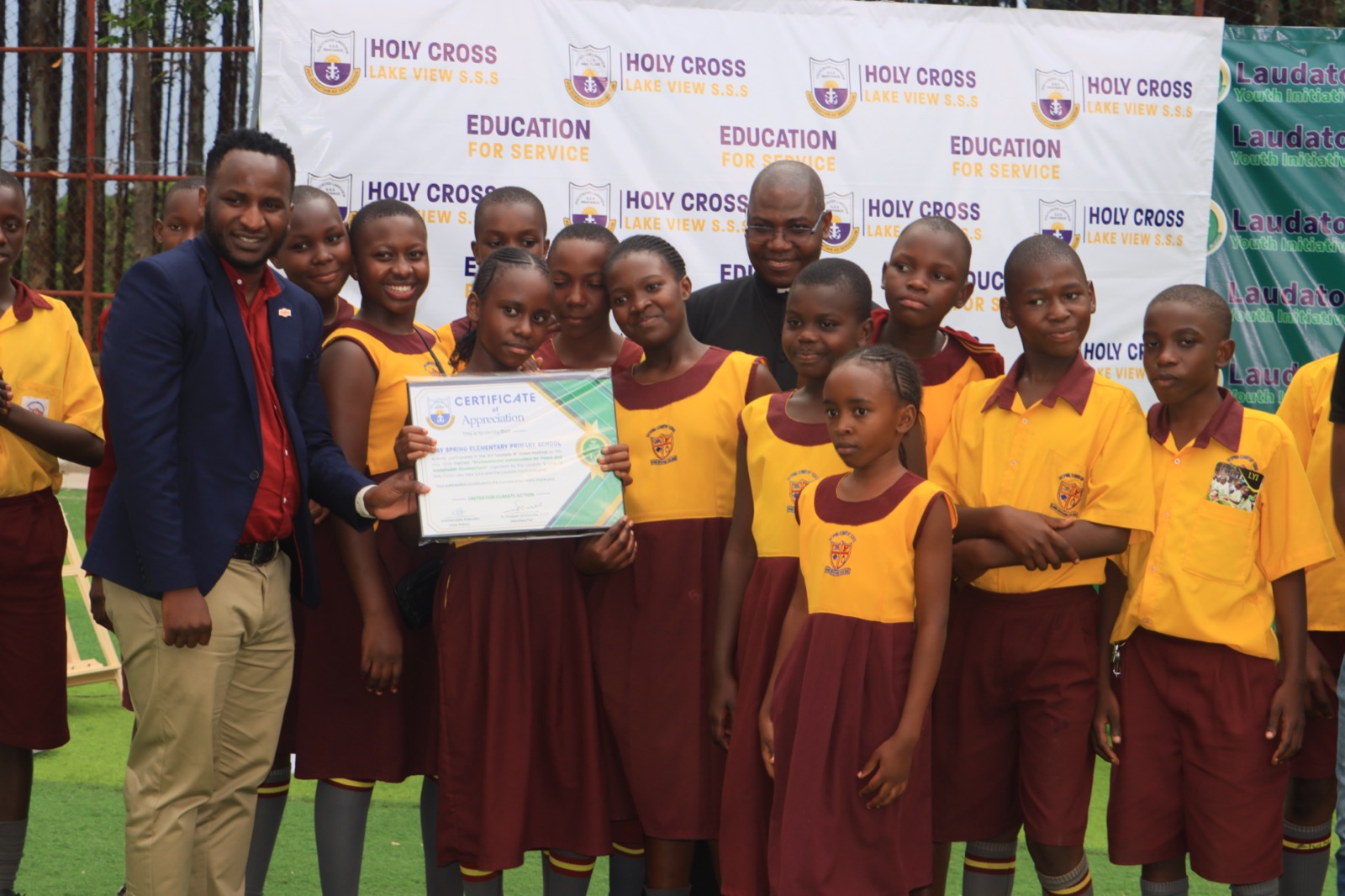
Organized by the Laudato Si’ Club of Holy Cross Lake View Senior Secondary School under the Laudato Youth Initiative, based at the John Paul II Justice and Peace Centre, Kampala. Fr. Prosper Atukwatse, C.S.C. hosted at the school.
Partners on the ground: Bethany Lands Institute, Foresters HSE Consults, Avail Fruits of Faith Farm, the Congregation of Holy Cross East Africa Province, and JdiobeSTEM Foundation. Vatican News carried the festival in English and Kiswahili.
For context, the festival has grown: the first, in 2023, drew more than 1,000 young people; the second, in 2025, drew more than 1,700 in person and more than 4,000 online.
Working with us
Schools apply for a partnership on one form, and we visit before anything is signed. There are no fees, and no money passes to the school. Students apply to the Science Fair themselves, online, with a real budget and prices from real shops.
Write to info@jdiobestem.org or call +1 405-437-4755. More on the Laudato Youth Initiative at laudato-youthinitiative.org.